Sacred wood traditionally used in meditation practice
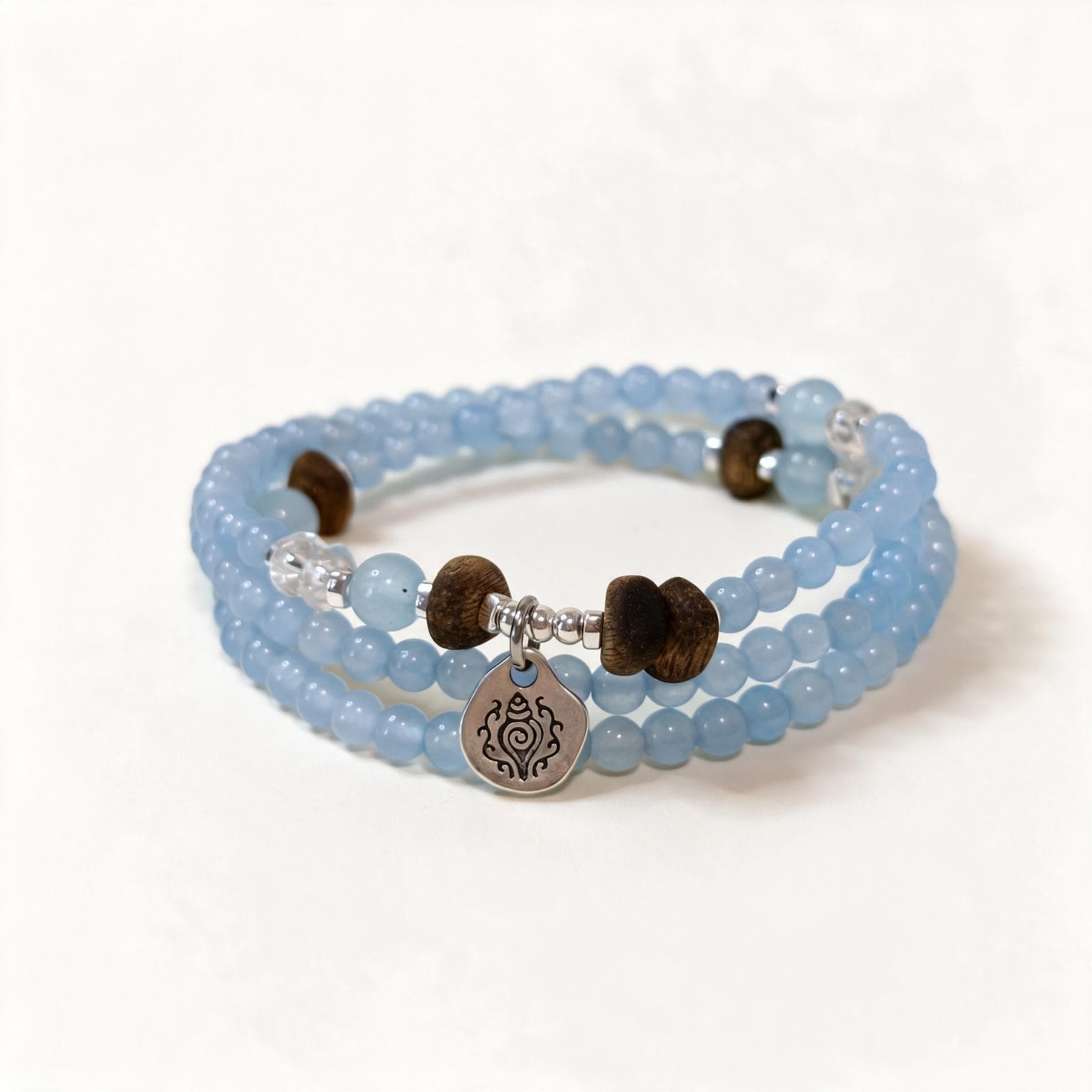
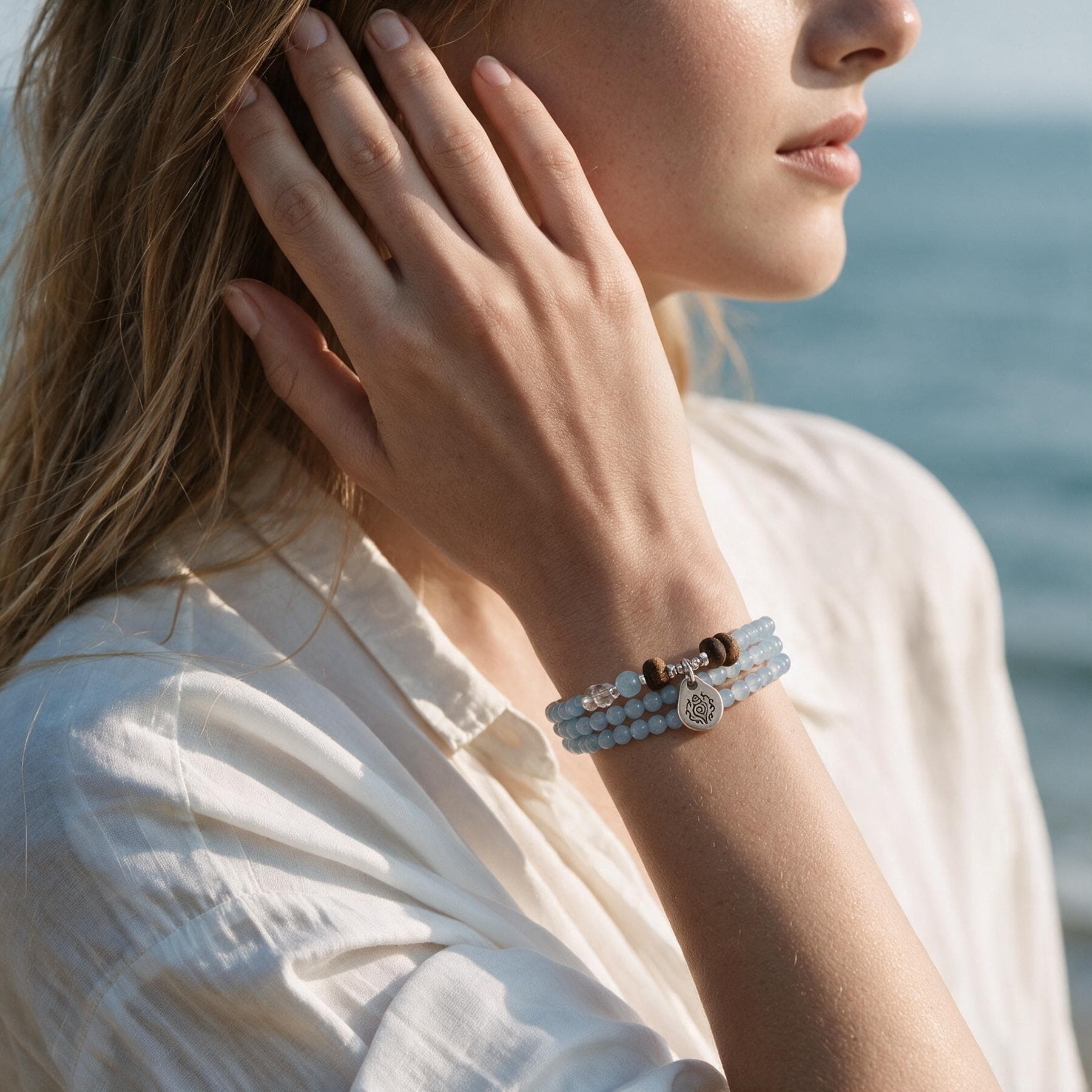
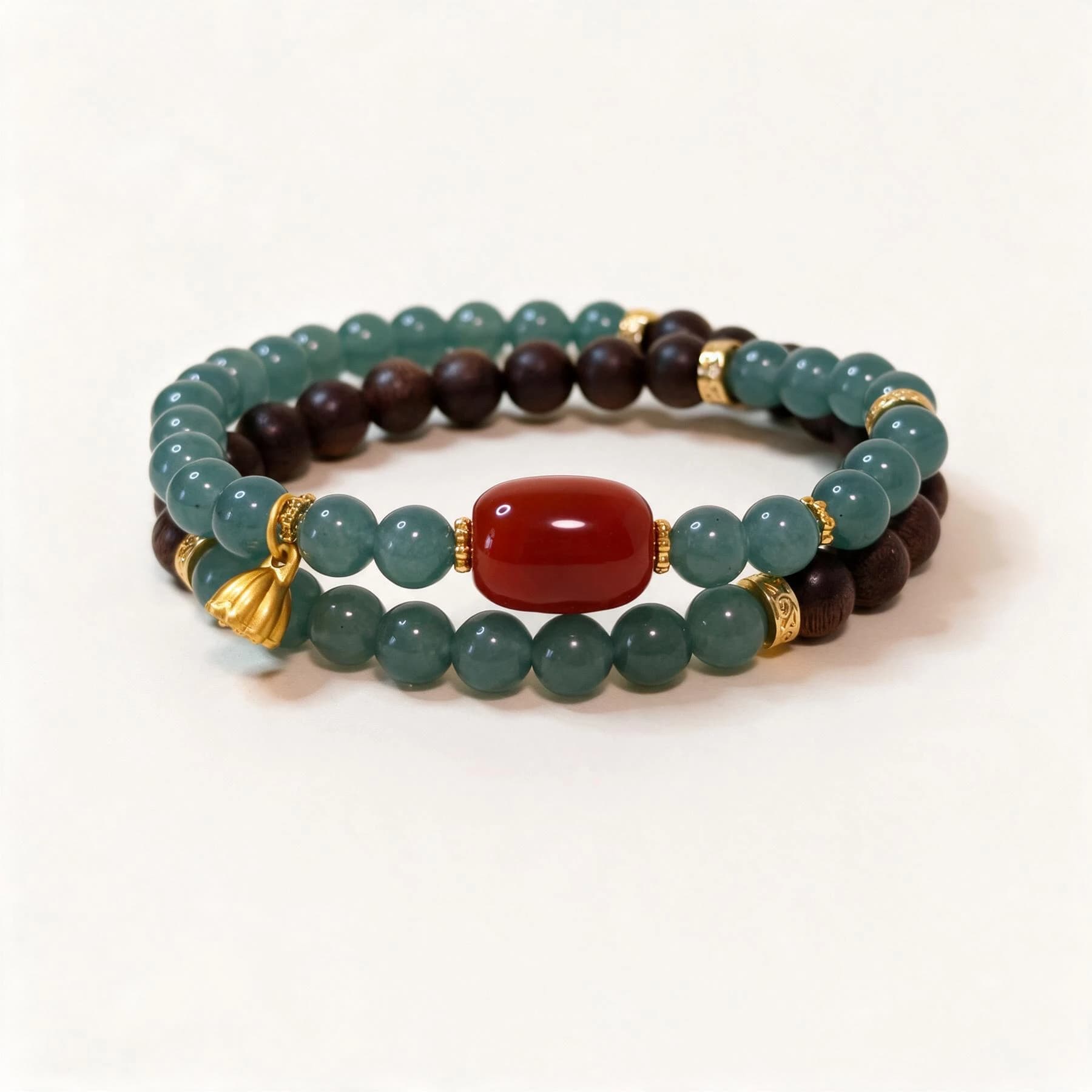
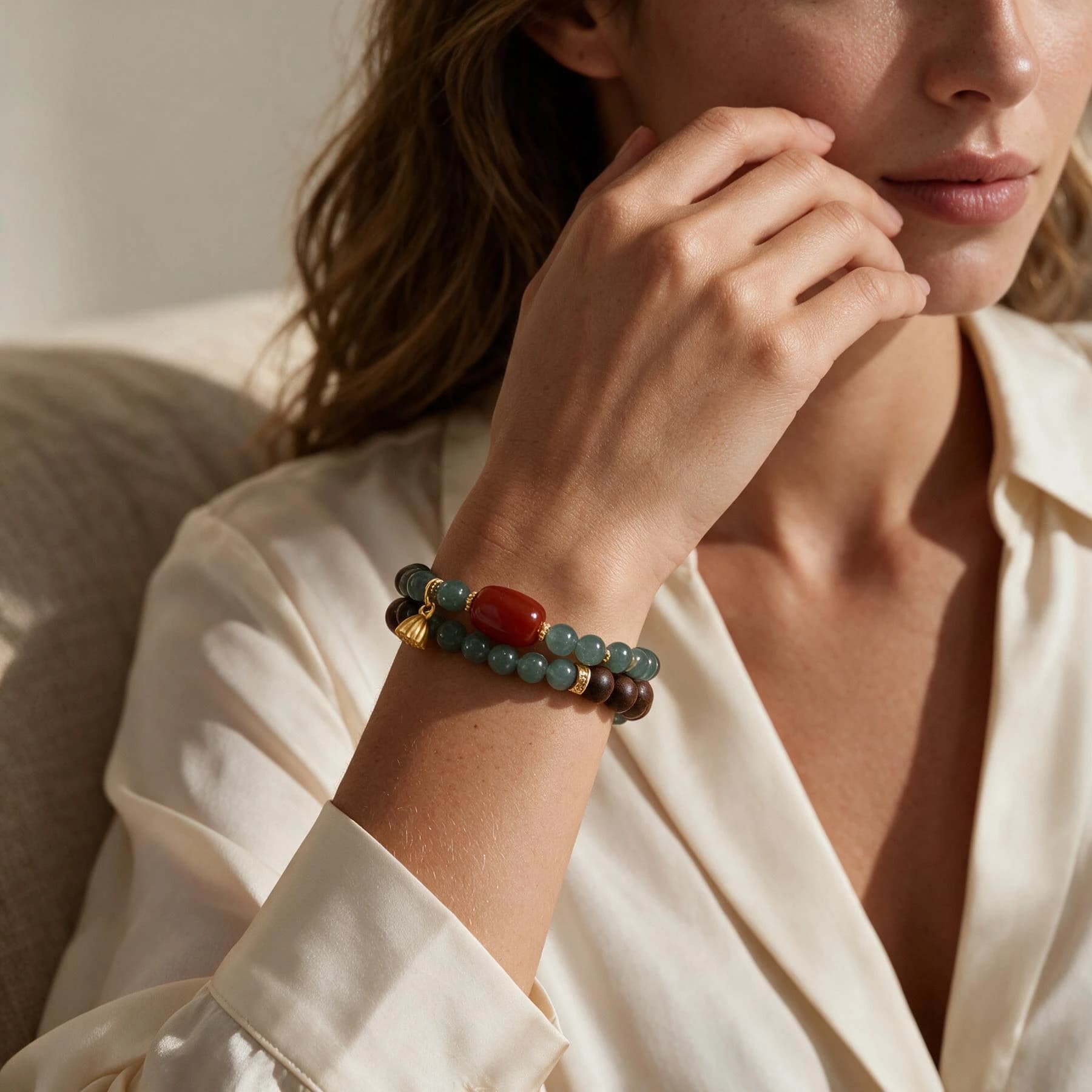
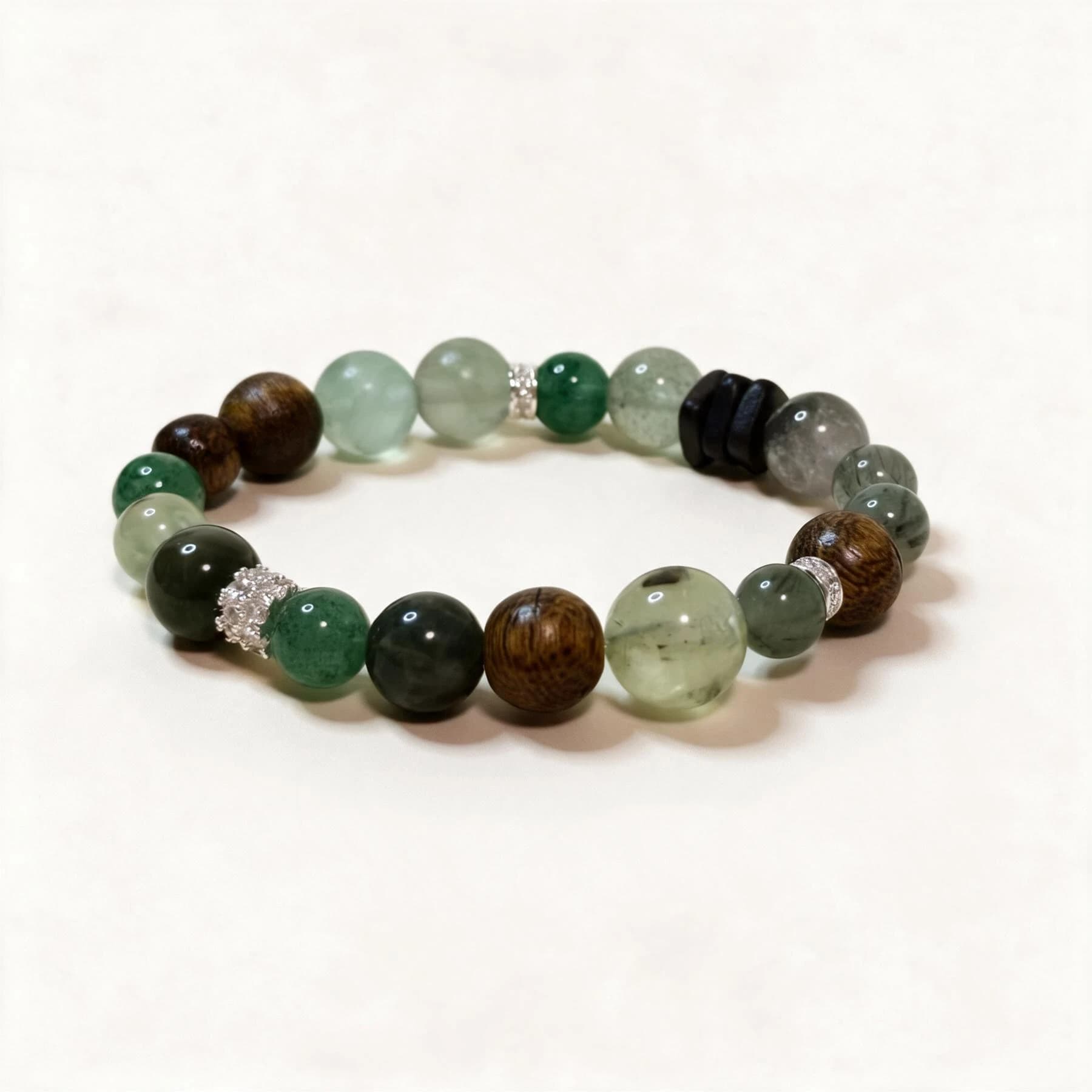
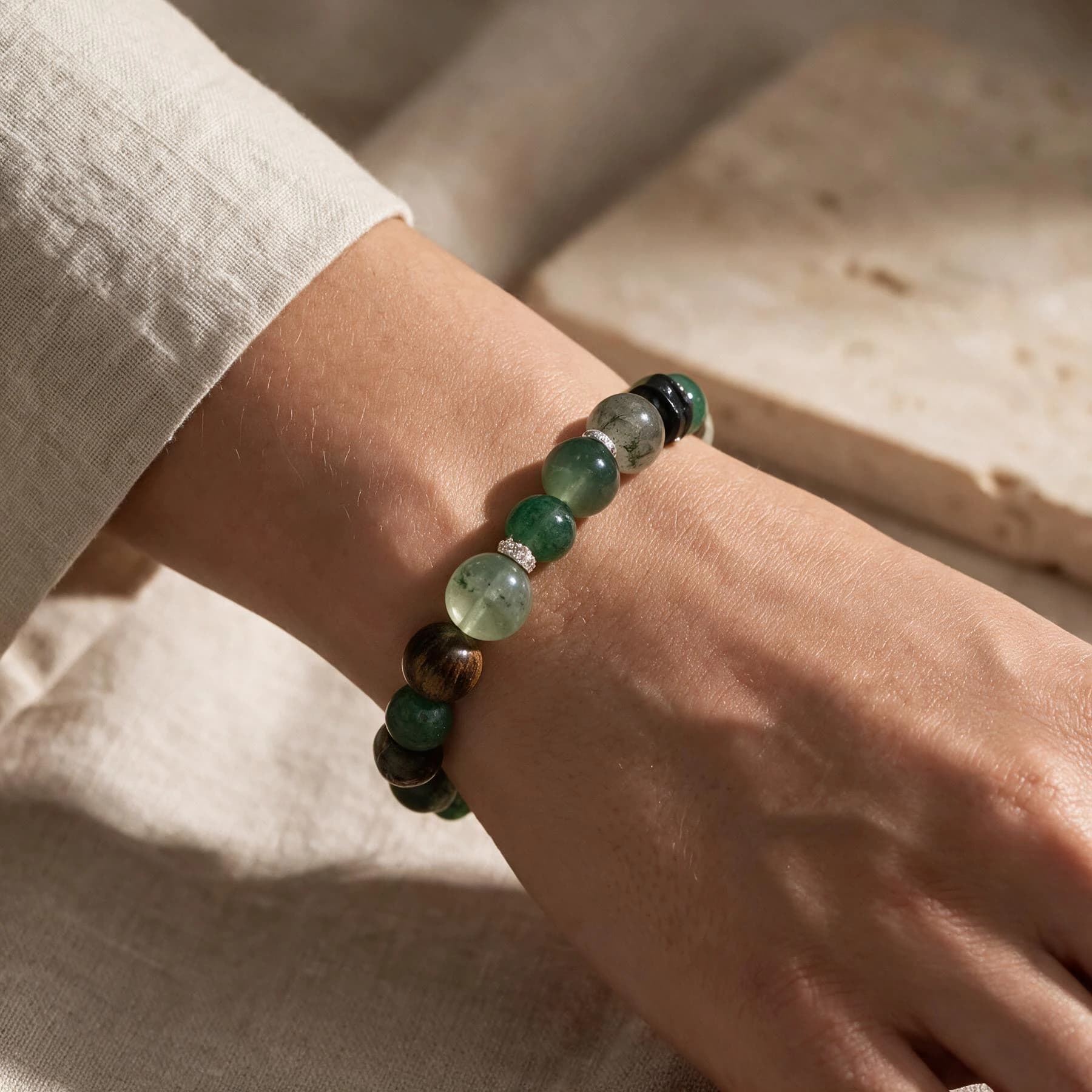
Agarwood is one of the most precious materials in Eastern tradition — a fragrant resinous wood so valued it is sometimes called 'the wood of the gods'. For centuries it has been carved into prayer beads and meditation bracelets across China, Japan and Southeast Asia, its deep, calming scent traditionally used to settle the mind before meditation or prayer. An agarwood bead bracelet is the quiet choice in our collection: understated, traditional, and made for people who meditate or simply want a calmer day.
Traditionally associated with calm, soothing energy and honest, heartfelt communication.
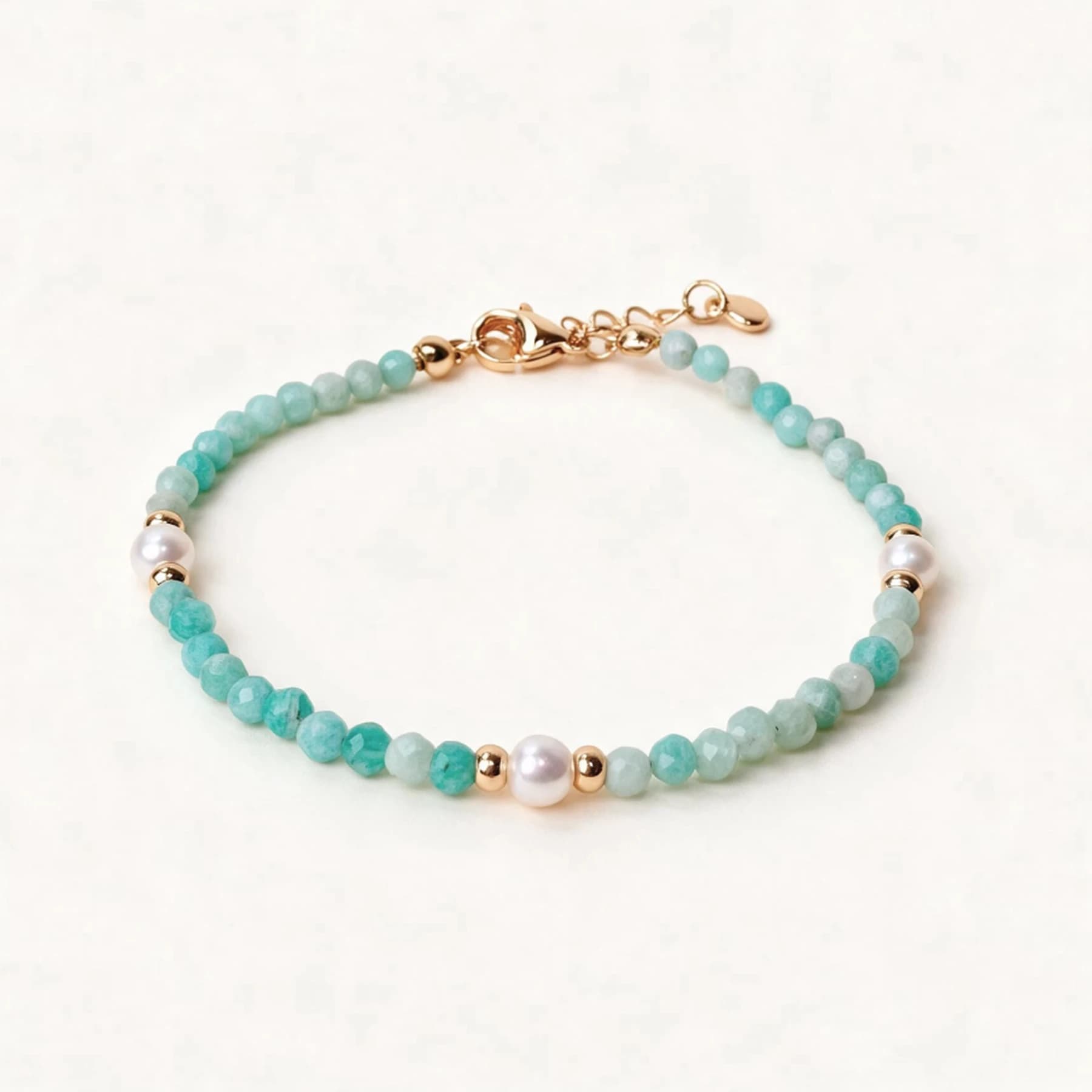
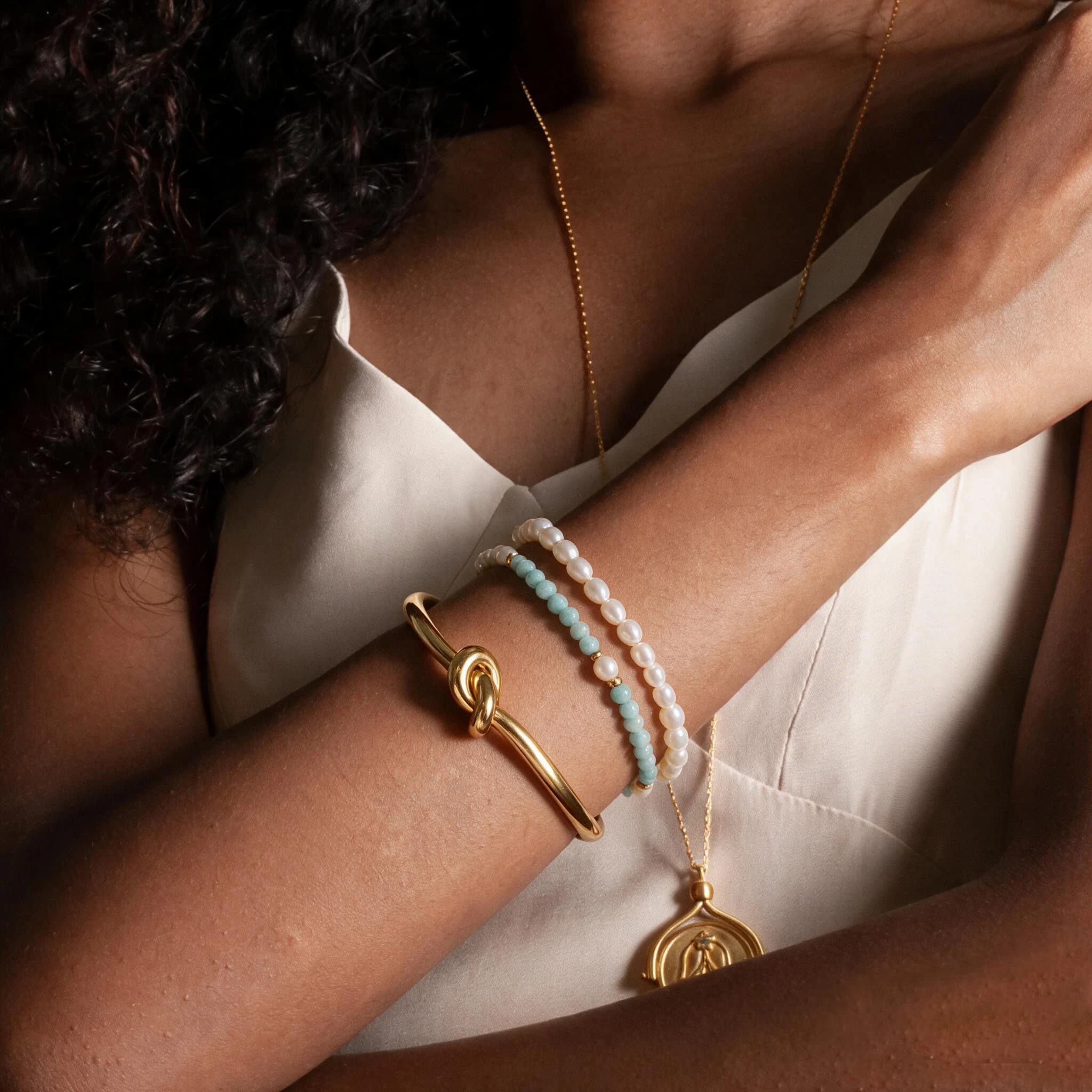
Amazonite is a green to blue-green variety of microcline feldspar, named after the Amazon River, though it is not actually found there; prized deposits come from Russia, Brazil, and the United States. Its soft sea-glass color has long made it a favorite for worry stones and gentle, everyday jewelry worn by those seeking a quieter, more balanced spirit. In gemstone tradition it is linked to the throat and heart, encouraging words spoken with kindness and truth, and it is often paired with pearls, moonstone, or aquamarine for a calming ensemble. It is a thoughtful gift for someone navigating a busy life or a new chapter, offering a quiet reminder to speak and live gently.

Calm & emotional balance · Meditation & mindfulness
Traditionally associated with calm, clarity and intuition
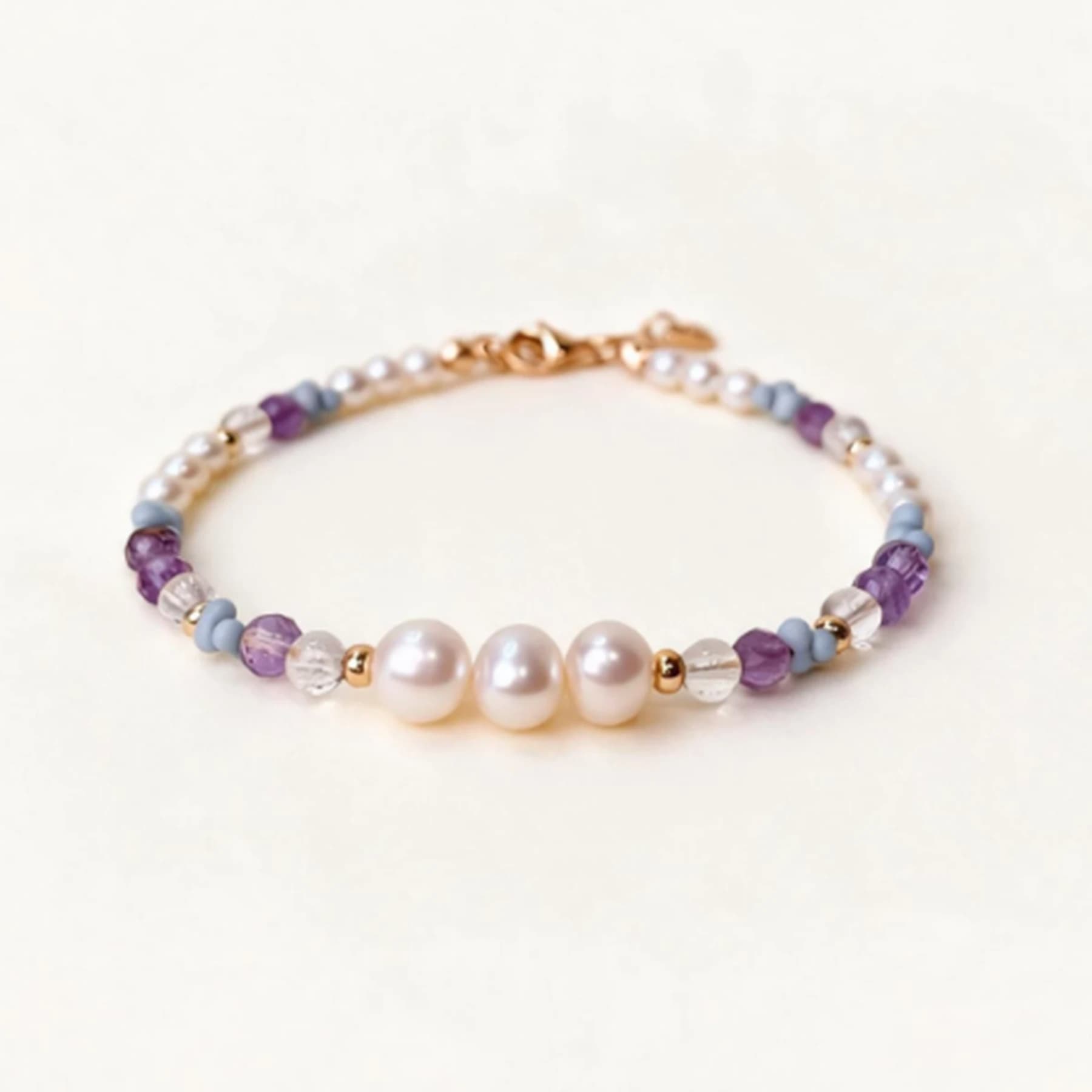
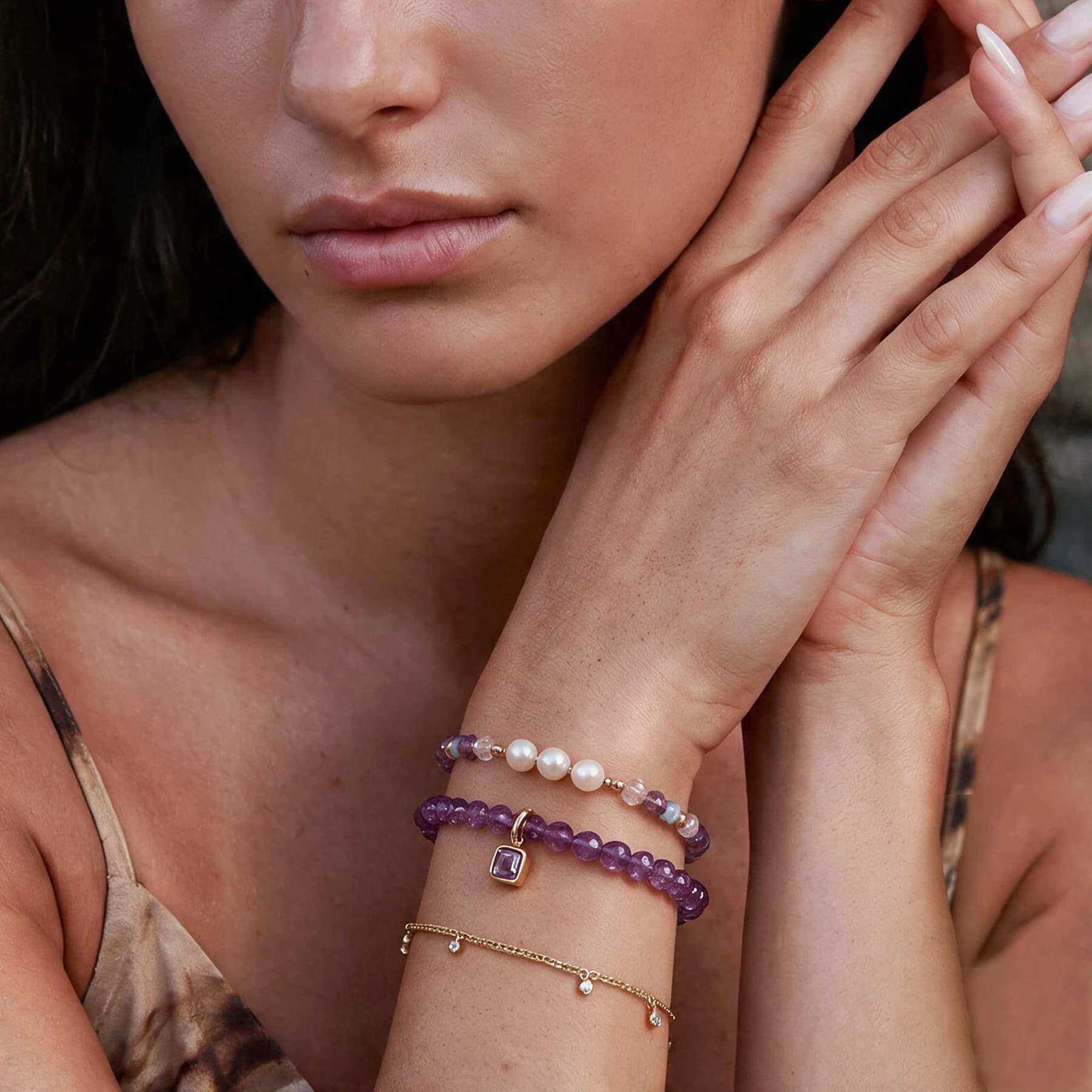
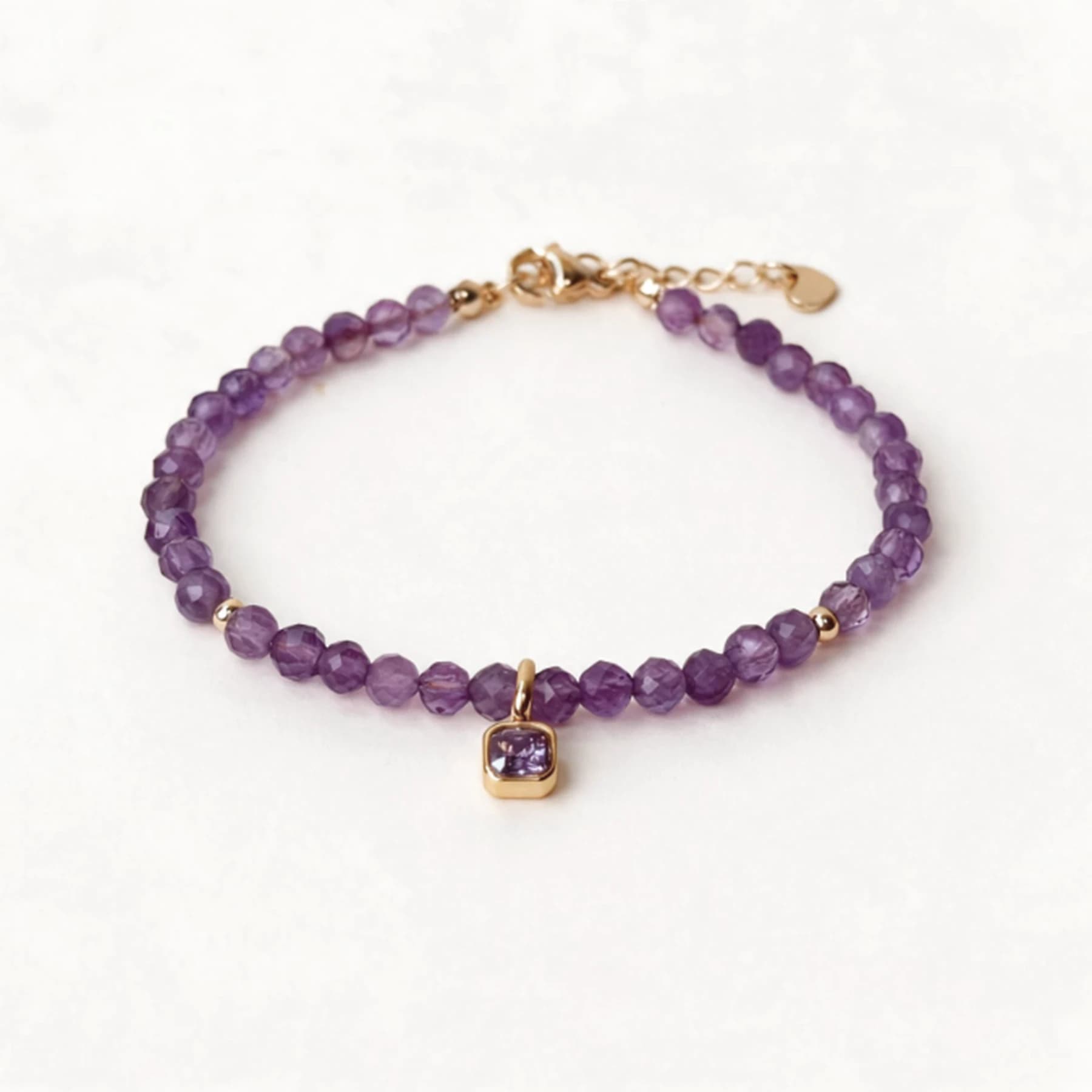
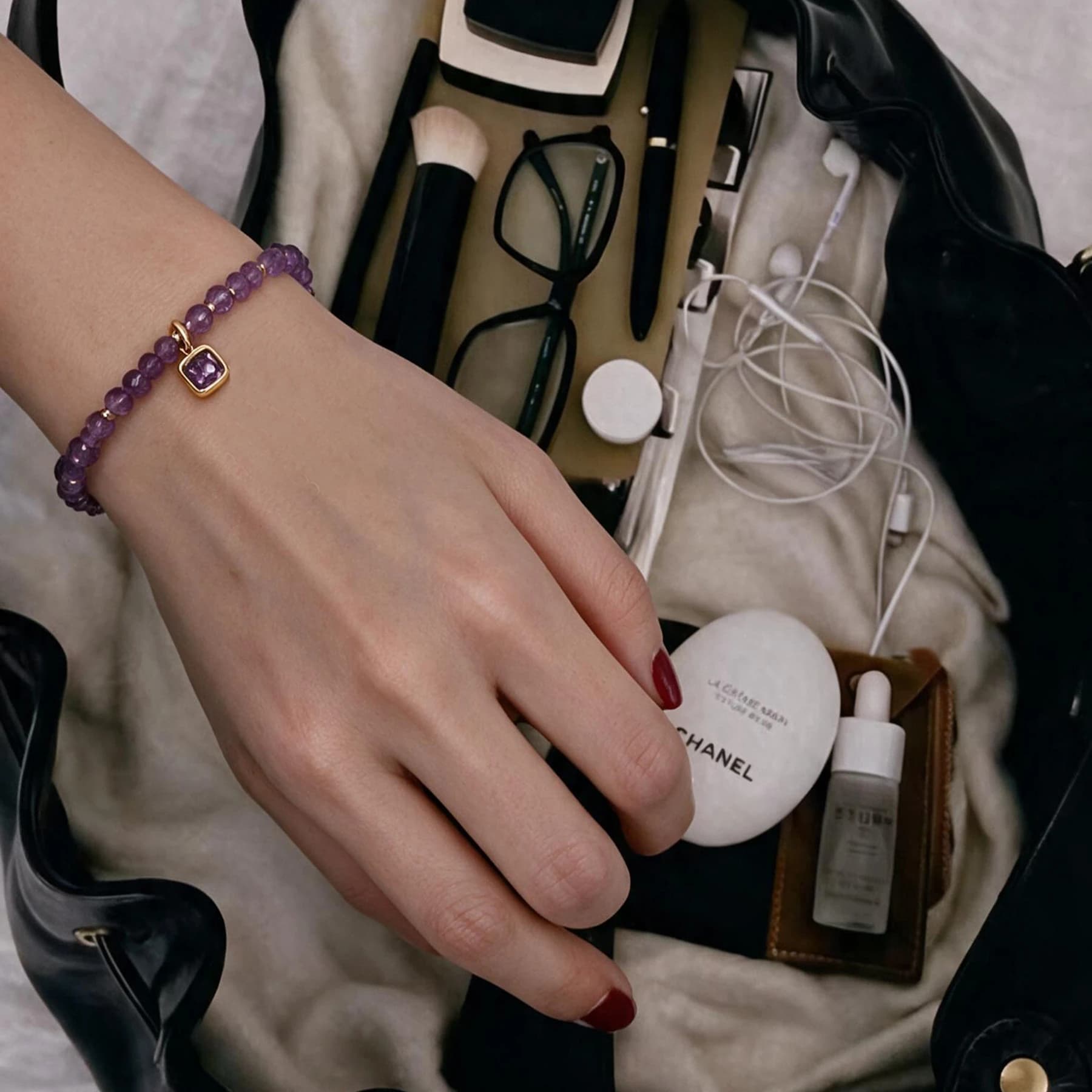
Amethyst is the gemstone most associated with calm — the traditional answer to 'which stone helps with stress and overthinking'. Its violet color has linked it to clarity of mind and intuition since antiquity, and as the February birthstone it also carries personal meaning for many wearers. An amethyst bracelet or pendant is traditionally kept close during meditation, placed on a desk to soften a stressful workspace, or worn in the evening as a reminder to slow down before sleep.
Traditionally regarded as a stone of serene communication and spiritual awareness.
Angelite draws its name from the word angel and has been used in modern gemstone practice to foster a sense of peace and heartfelt expression. It is often carried by those seeking a quieter mind and a deeper connection to inner guidance. Classic pairings include aquamarine for calm clarity and obsidian for grounding. It is commonly worn as a bracelet or kept close during reflection.

Safe travels & new chapters
Traditionally associated with calm, courage and clear communication
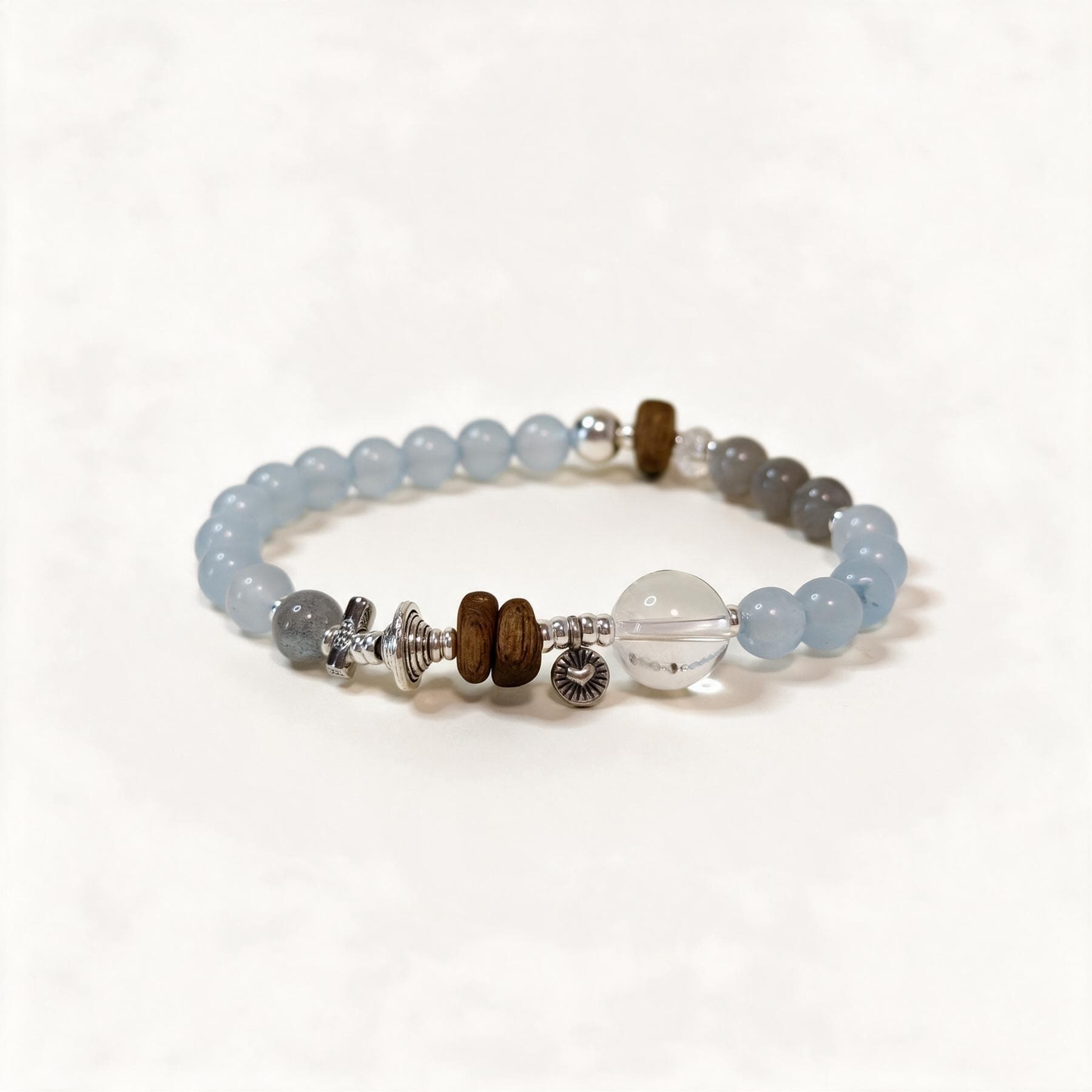
Aquamarine takes its name from seawater, and sailors once carried it as a talisman for safe passage — a tradition that makes it the classic travel-protection stone to this day. Beyond journeys, its pale blue calm has linked it with courage and clear communication: aquamarine is traditionally associated with the throat chakra and chosen by people who need to speak honestly under pressure. As the March birthstone it also makes a personal gift, and its cool tone pairs beautifully with clear quartz.
Traditionally valued as a stone of spiritual wholeness and multifaceted energy.
Black Gold Super Seven, also known as a melody stone variant, combines amethyst, clear quartz, smoky quartz and other mineral inclusions in a single dark matrix, making it a modern favorite in gemstone collecting. It is often chosen by those who appreciate stones that embody many layers of tradition in one form. Pair it with clear quartz for amplification or obsidian for a grounded, protective base. This complex stone is usually worn as a bracelet to keep its many frequencies close to the pulse.
A symbol of grounding and quiet strength
Black jade combines two of the oldest protective traditions in the world: jade, treasured across China and Mesoamerica as a stone of harmony and long life, and the deep black coloring associated with grounding and quiet strength. Where obsidian is intense, black jade is steady — traditionally worn not to repel the world but to stay calm and rooted inside it. A black jade bracelet suits anyone who wants protection jewelry with a softer, more balanced character.
Traditionally associated with calm, gentle communication and emotional balance
Blue chalcedony is the gentlest of the calming stones — a soft, milky blue traditionally associated with peaceful communication and emotional balance. Where amethyst quiets the mind, blue chalcedony is traditionally believed to soften the voice: it is the gemstone of listeners, mediators and anyone learning to speak without sharpness. A blue chalcedony bracelet suits daily wear precisely because its energy is mild — steady, cooling and easy to live with.
Traditionally regarded in Eastern culture as a symbol of harmony and protective energy.
Blue-water jadeite is one of the most quietly prized varieties of jade — a translucent blue-green jadeite whose cool depth has been compared to still water. Jade itself has been treasured in Chinese tradition for millennia as a symbol of protection, harmony and long life, and the blue-water variety is traditionally associated with calm judgment and steady prosperity: clear thinking held under pressure. A blue-water jadeite bracelet is the choice of people who want jade's protective tradition without the bright green formality — understated, cool-toned and easy to wear daily, and often paired with agarwood beads for a meditative combination.
Traditionally associated with calm, gentle communication and emotional renewal.
Blue‑Green Chalcedony belongs to the chalcedony family valued across Eastern and Mediterranean traditions for its soothing, water-like energy. Artisans have long shaped it into beads and amulets for wearers seeking harmony in speech and feeling. It pairs naturally with aquamarine for open communication and kyanite for tranquil focus. The stone is often gifted to encourage balance during times of change.
A timeless metal valued in feng shui tradition
Brass is not a crystal but one of the oldest materials in feng shui tradition — a metal of warmth and conductivity, long used for bells, singing bowls and protective charms across Asia. In energy jewelry, brass elements are traditionally believed to conduct and amplify the intention of the stones they accompany, which is why so many of our charms, spacers and pendants are cast in brass. It ages beautifully too, developing a patina that makes each piece more personal over time.
Traditionally linked with vitality and good fortune
Carnelian is the stone of vitality — a warm orange agate traditionally linked with motivation, creativity and good fortune. Ancient Egyptian craftsmen wore it for courage in their work, and it remains the classic gemstone for anyone rebuilding momentum: new fitness goals, a creative project, a business in its early days. In gemstone tradition it is tied to the sacral chakra, the seat of creative energy, and a carnelian bracelet is often chosen as a daily push to begin.
Traditionally worn as a symbol of grounding and protective awareness.
Cat's‑Eye Obsidian is a rare variety of obsidian that displays a silky band of light reminiscent of a cat's eye, prized in Asian lapidary arts for its watchful quality. In traditional use, it is kept as a guardian stone believed to reflect unwanted energy back to its source. It pairs well with black gold super seven for layered protection and tiger's eye for confident resolve. Wearers often choose it as a daily shield in bracelet form.
Prosperity & good fortune
A traditional Eastern symbol of protection
Cinnabar has held a special place in Chinese tradition for over two thousand years — carved into lacquer beads and stamped into seals as a symbol of protection, vitality and prosperity. A cinnabar bracelet is one of the most traditional forms of feng shui jewelry, often worn to attract wealth and ward off negativity, and it is frequently combined with pixiu or coin charms. Its deep vermilion red carries the same auspicious meaning as the red string, with the weight of an imperial craft tradition behind it.
Traditionally known as the merchant's stone, citrine is associated with abundance, confidence and warm, optimistic energy.
Citrine is a golden-yellow variety of quartz, treasured since ancient times in both Eastern and Western traditions as a stone of prosperity and joyful vitality. In Chinese feng shui practice, its warm golden hue has long been linked to wealth energy, and it is often worn by merchants, entrepreneurs and anyone welcoming abundance into their life. Citrine pairs beautifully with clear quartz, which is said to amplify its sunny energy, and with tiger eye, a classic pairing for confidence and bold action. It is a popular gift for new businesses, graduations and fresh starts, and its bright, honeyed glow suits both everyday wear and special occasions.
Known in gemstone tradition as a symbol of clarity and balance
Clear quartz is called the master healer of the gemstone world — the stone traditionally believed to amplify intention and the energy of every gemstone worn alongside it. That makes it the most versatile piece in any collection: a clear quartz bracelet works alone as a symbol of clarity and balance, or stacked with obsidian, rose quartz or amethyst to strengthen their purpose. It is also the stone most often recommended to beginners, because it asks nothing except that you decide what you want it for.
Traditionally associated with passion, vitality and protective energy.
Enhanced ruby is natural ruby whose color has been deepened by heat — a standard, permanent treatment that the trade has used for centuries. Ruby itself needs little introduction: in Chinese tradition its red carries the same auspicious energy as the red string — vitality, courage and the kind of prosperity that comes from decisive action. A ruby piece is traditionally worn to spark motivation and confidence before big moves, and its saturated red pairs naturally with gold settings and with grounding black stones like obsidian.
Traditionally associated with purity, calm and graceful beauty.
Freshwater pearls have been gathered and treasured in China for over four thousand years — long associated with the moon, with purity, and with wisdom gained through experience rather than force. In gemstone tradition the pearl is the stone of emotional honesty: traditionally worn to soften self-criticism and to mark grace under pressure. As a June birthstone it carries personal meaning for many wearers, and a pearl bracelet is one of the oldest meaningful gifts between mothers and daughters. Its soft luster pairs naturally with rose quartz for love and with clear quartz for clarity.
Traditionally regarded as a symbol of passion, vitality and commitment.
Garnet has been worn since the days of ancient Egypt and Rome, when travelers carried it as a promise of safe return — which is why it is still known as the stone of devotion and steady companionship. Its deep red is traditionally linked with the root of things: grounding, vitality and commitment that survives distance and time. As the January birthstone it makes a personal gift, and in gemstone tradition garnet is chosen by people rebuilding energy after a long season — the patient return of appetite for life. It pairs warmly with red agate and contrasts beautifully with black obsidian.
Colorful glass beads are traditionally associated with joy, light, and playful, hopeful energy.
Glassmaking has ancient roots across Mesopotamia, Egypt, Venice, and many Asian trade routes, with small colorful beads long used in jewelry, amulets, and personal adornment. Multicolor beads are often chosen to celebrate variety, optimism, and the beauty of contrasting light. They pair well with gold, pearl, and clear crystal pieces, adding a bright decorative accent to delicate chains. Today they are commonly worn in bracelets and layered jewelry or gifted as a cheerful, wearable token of friendship and celebration.
Traditionally associated with warmth, light, prosperity and the radiant energy of the sun.
Gold has been treasured for adornment and symbolism for over five thousand years, prized by ancient Egyptian, Chinese and Indian cultures as a metal of the sun, purity and lasting value. In Eastern tradition it is linked with good fortune and noble character, which is why gold jewelry is so often gifted at weddings, births and New Year celebrations. Gold pairs beautifully with red agate, jadeite and freshwater pearl for classic Eastern combinations, and with clear quartz or citrine when a brighter, sun-warmed look is wanted. A gold-plated piece like a double-chain beaded bracelet is typically worn daily as a quiet talisman of warmth and abundance, or layered with red string and gemstone bracelets for a personalized stack.
Traditionally associated with alignment, calm focus and the flow of energy.
Kyanite takes its name from the Greek word for deep blue and has been used in Eastern energy practices to support a sense of inner alignment without holding negative resonance. It is often favored by those who meditate or seek a clear channel for ideas and calm action. Classic companions include aquamarine for peaceful expression and smoky quartz for grounded stability. It is typically worn on the wrist or near the throat as a touchstone during busy days.
Traditionally regarded as a stone of intuition, transformation and protective energy.
Labradorite is a grey feldspar treasured since the 18th century, when it was first identified on the coast of Labrador, Canada, and named for the region. In Inuit tradition it is known as a stone of light, said to hold the aurora's glow within its dark surface. It is often worn by those seeking sharper intuition and steadiness through change, and it pairs beautifully with moonstone for calm awareness or with black tourmaline-style grounding stones like obsidian. Today it is commonly gifted at new beginnings — graduations, moves, fresh chapters — as a quiet talisman of courage and inner light.
A historic symbol of wisdom and truth
Lapis lazuli has been treasured for over six thousand years — ground into pigment for pharaohs' tombs and Renaissance paintings alike — as a symbol of wisdom, truth and honest expression. Its deep blue flecked with gold is traditionally associated with the third eye and throat, making lapis lazuli jewelry a favorite of writers, teachers and anyone whose work depends on saying the true thing clearly. It is one of the oldest stones in our guide and still one of the most requested.

Calm & emotional balance · Safe travels & new chapters
Traditionally associated with calm and new beginnings
Moonstone is the gemstone of new beginnings. Its floating sheen — called adularescence — has linked it to the moon and to cycles of change in traditions from India to Rome, and it is traditionally given at life transitions: a move, a new marriage, a first child, a fresh start. As a June birthstone it carries personal meaning too. Wearers often choose a moonstone bracelet when they want calm, emotional balance and a quiet reminder that phases pass and begin again.
Traditionally associated with calm, protection and the gentle, nurturing energy of the sea.
Mother-of-pearl is the smooth iridescent lining found inside certain mollusk shells and has been used for ornaments, amulets and inlay across many coastal cultures. In crystal and Eastern-inspired traditions, it is often worn as a soothing talisman for safe passage, emotional balance and connection to the rhythms of water. It pairs beautifully with gold settings, pearls, aquamarine and moonstone when creating soft ocean-inspired jewelry. It is commonly given as a gift for travel, new beginnings or someone seeking a quiet protective emblem.
Traditionally worn as a symbol of grounding and protection
Black obsidian is the stone most people reach for when they search for a protection bracelet. Formed from volcanic glass, it has been carved into amulets for centuries and is traditionally believed to absorb negative energy and shield its wearer. An obsidian bracelet is the classic choice for empaths, frequent travelers and anyone who feels drained after long days around other people. In feng shui tradition it is often paired with tiger eye for a grounding-and-courage combination, and many wearers choose the left wrist to receive its protective energy.
Traditionally associated with inspiration, creativity, hope and faithful love.
Opal is a hydrated amorphous form of silica treasured for its play of color, a shifting glow created by light interacting with microscopic silica spheres. In European tradition it was linked with hope, purity and loyalty, while in later lore it became a romantic stone given to express devotion. Because each opal flashes differently, it has often been treated as a personal stone—chosen for the way its color seems to match the wearer. It pairs naturally with moonstone, pearl and clear quartz in soft, luminous stacks, and is worn as a signature ring or gifted for October birthdays and meaningful milestones.
Traditionally associated with purity, calm, peaceful energy and graceful beauty.
Pearls have been treasured for thousands of years across Eastern and Western cultures, prized as symbols of purity, wisdom and serene elegance. In Chinese tradition pearls were associated with moonlight and believed to carry gentle, yin energy, while in Western cultures they became the classic gem of brides and formal grace. Pearls pair beautifully with gold settings, moonstone, rose quartz and clear quartz, and they are often worn as single drop pendants or strung as classic strands. A pearl piece is a timeless gift for weddings, anniversaries and milestones, symbolizing lasting affection and quiet refinement.
Traditionally associated with light, warmth, abundance and the joyful energy of the sun.
Peridot is a lime-green gem variety of the mineral olivine, treasured since ancient Egypt, where it was called the "gem of the sun" and believed to glow with golden light. It is the traditional August birthstone and has long been gifted to mark birthdays, anniversaries and new beginnings. In Eastern and Western traditions alike, peridot is paired with warm metals like gold and with heart motifs to symbolize generous, open-hearted energy. Today it is worn as a personal birthstone marker and as a bright, optimistic accent in everyday talisman jewelry.
Traditionally associated with spiritual clarity and expanded awareness.
Purple azeztulite is a modern American addition to the gemstone world — a rare quartz variety named in the late twentieth century and embraced by the New Age tradition for its supposed high, clear vibration. Where ancient stones carry centuries of folklore, azeztulite appeals to wearers who like their symbolism light and forward-looking: it is traditionally chosen for spiritual curiosity, meditation and the feeling of starting fresh. Violet quartz of every kind has long been associated with intuition and calm, and this stone slots naturally beside amethyst in a meditation stack.
Traditionally associated with reflection, calm and gentle self-expression.
Chalcedony takes its name from the ancient Greek city of Chalcedon, and its violet-toned varieties have long been treasured for their soft, contemplative beauty. Purple chalcedony is traditionally worn by those who value quiet moments of thought and measured, heartfelt speech. It pairs naturally with amethyst for deeper calm, clear quartz for balance, or rose quartz for tender expression. Worn alone it feels serene and understated; layered with other gemstone strands it adds a muted, reflective note, and it is often gifted as a token of peaceful companionship.
Traditionally associated with vitality, stability and grounded strength.
Red agate is one of the oldest used gemstones in the world — carved into beads and seals across ancient China and Mesopotamia alike. Its deep warm red is traditionally linked with vitality, courage and steady good fortune: where cinnabar is intense, red agate is sustained — the energy of showing up day after day. In Chinese tradition it is also a protective stone, often given to children and travelers, and it shares the grounding warmth of carnelian agate. A red agate bracelet suits anyone building momentum slowly — the long project, the steady practice, the patient comeback.
Traditionally associated with grounding strength and emotional resilience.
Red amphibole quartz is quartz threaded with fine red amphibole inclusions — each bead a frozen landscape of needles inside clear crystal. Inclusion stones like this are traditionally read as stones of inner strength: the fiery color held inside a calm, transparent body. Wearers choose it for steady courage rather than bursts of it — the resilience to keep a kind tone and a clear head on difficult days. It pairs naturally with clear quartz, whose amplifying tradition suits an inclusion stone especially well, and with warm red agate.
Protection & grounding · Prosperity & good fortune
An ancient talisman symbolizing protection and good fortune
The red string bracelet is one of the oldest good-luck talismans in the world, worn across Chinese, Tibetan and Kabbalah traditions as a symbol of protection and fortunate connection. In Chinese culture, red is the color of joy and warding — a red string on the wrist is said to keep misfortune at bay and attract the people and opportunities meant for you. It is the most gifted piece in our shop: a red string bracelet makes a meaningful present for someone starting a new job, a new relationship or a new chapter of life.
Traditionally associated with compassion, tenderness and emotional warmth.
Rhodochrosite is a manganese carbonate mineral prized for its rosy pink to raspberry tones and softly banded patterns. In gemstone tradition it has long been linked with the heart, kindness and the courage to give and receive care. It is often worn as a gentle reminder of self-respect, empathy and warm connection, and it pairs naturally with rose quartz for softness, garnet for devotion, or clear quartz for clarity. Classic uses include bracelets, pendants and keepsake jewelry gifted to mark affection, reconciliation or a new chapter of self-care.
The classic symbol of love and compassion
Rose quartz is known worldwide as the stone of love — but its tradition is broader than romance. It is the gemstone of self-compassion, gentle relationships and an open heart, which makes a rose quartz necklace or bracelet the most popular gift between friends as well as partners. In gemstone tradition it is connected to the heart chakra, and many wearers choose it after a breakup or during a period of rebuilding, as a daily reminder to be kind to themselves first.
Traditionally prized in Chinese carving culture as a stone of good fortune, longevity and cultivated refinement.
Quarried for centuries near Shoushan village in Fujian province, Shoushan stone has been the premier material for Chinese seal carving since the Ming dynasty, when emperors and scholars treasured it as a symbol of status and learning. Its soft, fine grain takes a beautiful polish, and the prized varieties range from creamy white to warm red-veined tones. In Eastern tradition it is a classic gift for students, artists and calligraphers, and it pairs naturally with pearls and jade in refined jewelry. Today it is worn as a bead or carved charm by those who value its heritage of elegance and quiet good fortune.
Traditionally regarded as a stone of steady grounding and protective calm.
Smoky Quartz has been treasured across cultures for its misty, earth-toned translucence and its association with the root of the earth's energy. In Eastern and European traditions, it is worn to anchor restless thoughts and to create a sense of resilient stillness. It pairs beautifully with obsidian for deep protection and blue chalcedony for emotional ease. The stone is often strung into bracelets for everyday wear during demanding seasons.
Traditionally associated with love, gratitude and gentle joy.
Strawberry quartz is clear quartz flecked with red iron inclusions that give it a soft, seeded-pink glow — like rose quartz warmed up. Its tradition is young but easy to love: a stone of gentle joy, affection and everyday sweetness, often chosen by wearers who find rose quartz too quiet and carnelian too loud. In gemstone practice it is kept for mood-lifting rather than heavy work — a reminder to enjoy small good things. It stacks beautifully with rose quartz for love, clear quartz for clarity, and any of the red agates for warmth.
Traditionally associated with warmth, joy, confidence and the bright, energizing spirit of the sun.
Sunstone is a glittering feldspar treasured for its warm peach-to-orange glow and flashing aventurescence. In gemstone tradition it has been carried as a sunny talisman for optimism, self-assurance and an abundant outlook, often worn by people stepping into leadership, new work or a more visible season of life. It pairs naturally with citrine-like golden tones, clear quartz for clarity, and grounding stones such as smoky quartz or red agate when balance is wanted. Worn as a bracelet, it is an easy everyday piece for layering, and it is often gifted to encourage confidence, celebration and a hopeful start.
Confidence & courage · Prosperity & good fortune
Traditionally linked with courage and confidence
Tiger eye is the confidence stone: its golden-brown bands have been linked with courage, focus and steady willpower since Roman soldiers carried it into battle. Today a tiger eye bracelet is the traditional choice before job interviews, negotiations and big launches — moments when you want grounded energy rather than nerves. In feng shui it is also considered a stone of prosperity, often recommended for entrepreneurs, and it pairs naturally with black obsidian for protection on the way up.
A durable modern metal traditionally valued in jewelry for its strength, lasting shine and steady, grounding presence.
Titanium steel is a contemporary jewelry metal prized for being lightweight, corrosion-resistant and remarkably hard to scratch, which is why it has become a favorite base for plated and charm pieces meant for everyday wear. In modern jewelry tradition it is chosen for pieces that stay bright through daily life — bracelets, chains and settings that hold their polish. It pairs especially well with luminous materials like pearls and clear quartz, where its cool silvery tone lets the stones' soft glow stand out. It is often gifted as a token of lasting, unwavering affection because of how well it endures.
Traditionally regarded in Eastern and Native American cultures as a stone of protection, calm and serene communication.
Turquoise is one of the oldest gemstones known to humanity, treasured for thousands of years across Persia, Tibet, Egypt and the Americas, where it was set into amulets, ceremonial objects and jewelry. Persian tradition named it after the notion of victory, and it was famously used to decorate palace domes and the thrones of rulers. In Tibetan and Native American traditions, turquoise has long been carried as a protective talisman on journeys, believed to bring calm and safe passage. It pairs beautifully with pearls, which soften its energy with purity and grace, and with gold accents that give it warmth. Today it is worn as an everyday protective stone and gifted to wish someone peace and safe travels.
Traditionally valued as a symbol of balance and steady grounding.
Yanyuan agate comes from Yanyuan county in Sichuan, China — a region whose agates have been collected and carved for generations and are prized for their dense, waxy luster and painterly bands. In Chinese collecting tradition, a fine yanyuan agate is appreciated the way jade is: for its color depth, its warmth in the hand, and the landscapes in its patterns. As energy jewelry it carries the general agate tradition of steady grounding and quiet good fortune, and its natural artistry makes each bead one of a kind.
Obsidian protection jewelry
Grounding · Shielding · Everyday protection
Obsidian protection jewelry is the most traditional shield against negative energy — volcanic glass carried as an amulet for centuries, worn to absorb what you should not have to.
A protection bracelet earns its place on the wrist through routine: worn daily, black obsidian is traditionally believed to form a quiet barrier between you and draining environments — crowded commutes, difficult meetings, other people's moods. Tradition places receiving energy on the left wrist, which is where most wearers keep their obsidian. For layered protection it is classically paired with a red string, and with tiger eye when protection needs courage alongside it.
SHOP OBSIDIAN JEWELRY →Red string bracelet meaning
Protection · Good fortune · Connection
A red string bracelet is one of the oldest good-luck talismans in the world — worn across Chinese, Tibetan and Kabbalah traditions as a symbol of protection, good fortune and fated connection.
In Chinese culture red is the color of joy and warding, so a red string on the wrist is traditionally worn to keep misfortune at bay and attract the people and opportunities meant for you. It is traditionally tied on by someone who cares about you, which makes it the most gifted style in our shop — for a new job, a new relationship, a new year. Wearers often layer it with obsidian or cinnabar for protection with more weight behind it.
SHOP RED STRING JEWELRY →